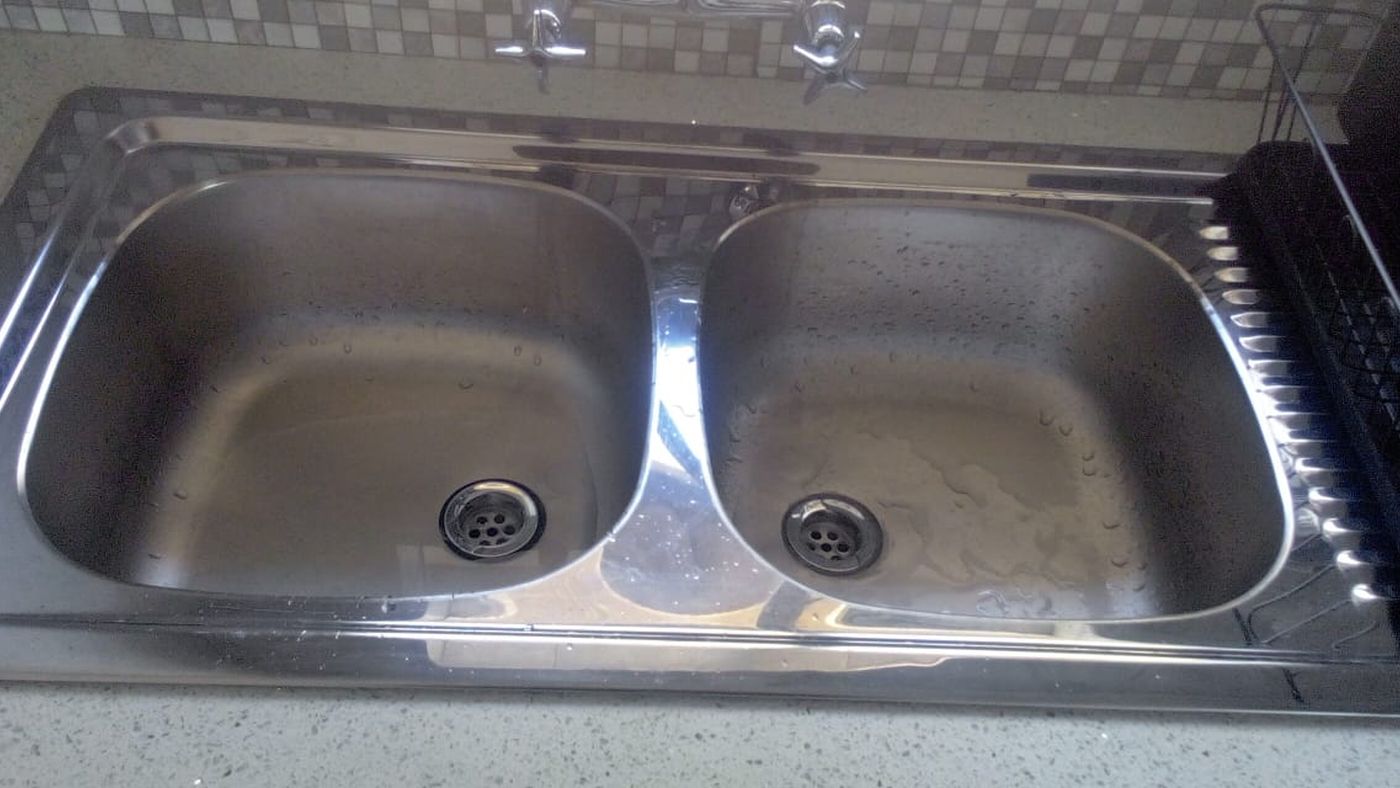
Planning insightKitchen plumbing planned around everyday use
Kitchen plumbing must handle frequent water use, food residue, appliances and cabinetry without becoming difficult to maintain. Our plumbers consider the full working area so taps, sinks, wastes and appliance connections operate reliably and remain accessible after installation.
Sink and mixer positioning
The sink, mixer and isolation valves should suit the worktop, cupboard layout and the way the kitchen is used. Correct positioning prevents strain on flexible connectors and leaves space for waste fittings and storage.
When replacing a mixer, we check pressure, mounting thickness and connection sizes rather than assuming every tap is interchangeable.
Waste pipe fall and ventilation
Kitchen waste carries grease and food particles, so pipe diameter, fall and routing matter. Excessive bends or flat sections encourage recurring blockages and odours.
The trap must retain a water seal while remaining accessible for cleaning. Poor venting or incorrect appliance connections can siphon the trap and allow drain smells into the room.
Appliance water and drainage connections
Dishwashers, washing machines and water filters need secure supplies and controlled waste connections. Hoses should not be kinked, stretched or hidden where leaks can continue unnoticed.
Dedicated isolation allows an appliance to be serviced without shutting down the entire home.